
News & Resources
MAJOR UPDATE: Supreme Court Allows Trump Administration to End Temporary Protected Status. Learn more.

This summer marks 250 years since the founding of the United States of America. Even before 1776, this country has been built by immigrants from every corner of the world and has become a reflection of the world’s cultures. From Ellis Island to the Refugee Act of 1980 and beyond, the people of the United States have a history of welcoming, even in the face of attempts throughout history to marginalize immigrant communities and dispossess indigenous populations.
Over the past weeks, we asked you – our community – to tell us about what immigration to the United States means to you and you delivered in a huge way. It was incredible to hear what drives you and we are extremely grateful that you offered us an opportunity to hear your story. We heard from people across the world: some immigrants to the United States, some still experiencing displacement abroad, some born in the United States but with roots in a different land, and others who have been in the country for many generations and are just eager to welcome new neighbors to their communities.
Thank you to everyone who submitted their beautiful words and stories. While we received too many to include them all, we selected a few that exemplify what the United States means to the IRAP community 250 years after the country’s founding.
The refugee resettlement program has been a hallmark of this country’s ability to welcome displaced people since the passing of the Refugee Act of 1980 and has allowed families from all over the world who have been forced to leave their homes to find safety in the United States.
IRAP’s Global Partnerships Director Bahati Kanyamanza called from Texas to talk about what resettling to the United States meant to him and his family:
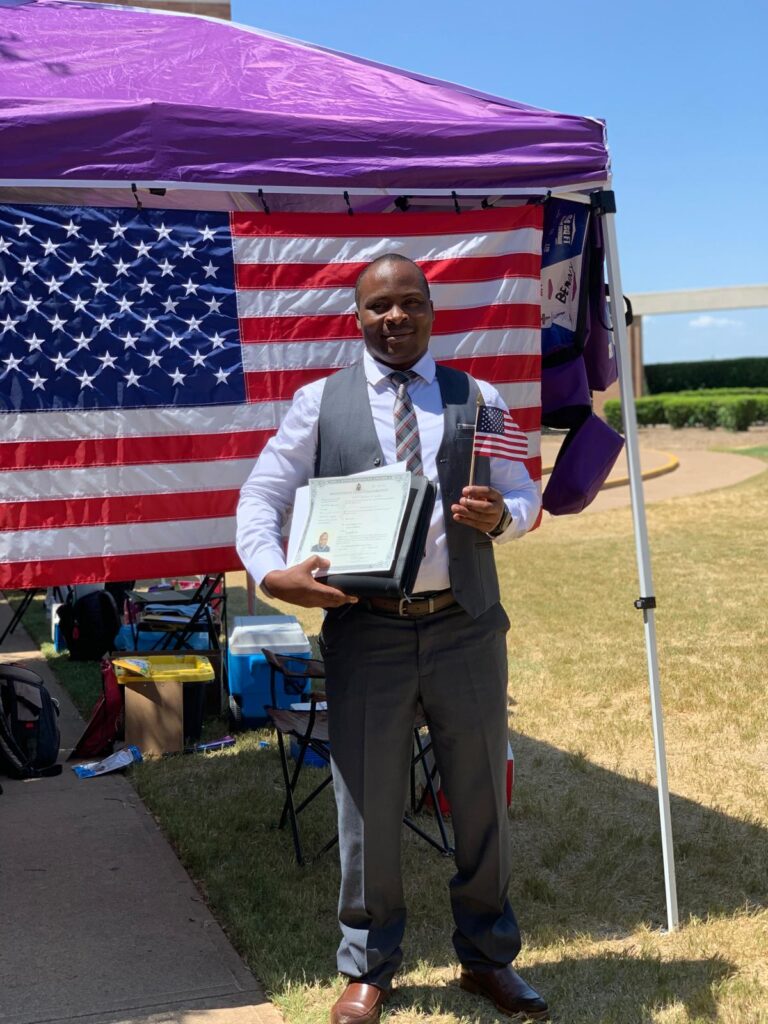
Bahati now dedicates his life to fighting for those experiencing displacement to find safety. This was a common thread among the resettled population: don’t forget about those left behind.
A refugee who lives in California wrote us about the feeling of safety and freedom his family now feels, but expressed desire for others in his family to join:
“Family survived a deadly attack in 2019 and faced continuous harassment for six years. My wife was permanently disabled with her injuries. Now in 2026 we are safe, able to seek employment and no one is looking to hurt my family and I.
Unfortunately, I still have family members awaiting help and they live in fear but we pray everyday that they will join us soon. Even if they go to another destination, they will feel what safety and freedom feels like.”
As IRAP continues to fight against the dismantling of the U.S. refugee program and other anti-immigrant attacks by the federal government, it is important to hear from people who had to flee their homes and have yet to find safety. Their stories deserve to be heard.
One submission detailed the story of a child with Down syndrome who spent years going through refugee processing to join his family in the United States, only to have his flight cancelled when President Trump indefinitely suspended refugee admissions:
“Today, he continues to wait. He lives apart from his mother, brother, and sister, who remain in the United States. The separation has now lasted for years. Every missed birthday, every family gathering, and every holiday is another reminder of the time that cannot be recovered.
His story is not about politics. It is about a child who misses his mother. It is about a family that followed every step of the process and believed that patience would lead to reunion. It is about a child with Down syndrome whose greatest wish is not extraordinary—he simply wants to live with the family he loves.
For this child, hope remains alive. Even after years of waiting and disappointment, he continues to dream of the day he will finally walk through an airport gate and into his mother’s arms, ending a separation that has lasted far too long.”
Those who face persecution due to their work with the U.S. government also continue to experience the heartbreak of the shutdown of refugee resettlement. We received this note from someone stranded in Egypt:
“For years, we served the United States as employees of the U.S. Embassy in Yemen during one of the most difficult periods in the country’s history. Because of our service and association with the United States, many of us faced threats, intimidation, and serious security risks that forced us and our families to leave our homeland.
Following guidance from the U.S. Embassy, many of us relocated to Egypt and entered the refugee resettlement process. We placed our trust in that process and hoped it would lead our families to safety and stability. However, after years of waiting, more than 100 former employees and their families remain stranded in uncertainty.
Today, many families struggle to provide food, housing, medical care, and education for their children. More than 450 children are growing up without the stability and security that every child deserves.
When asked what we hope America passes on to future generations, our answer is simple: freedom, safety, democracy, kindness, opportunity, welcoming those in need, the rule of law, and a country where people can live without fear.
Despite the hardships we face, we continue to believe in these values and in the power of compassion and humanity. We hope our story serves as a reminder that behind every case number is a family seeking nothing more than safety, dignity, and the chance to build a better future.”
For as long as this country has had politicians who aim to demonize immigrants through exclusionary policies, there have been everyday Americans eager to welcome.
A supporter named Susan called to tell us about how a connection she made as a little girl in 1956 shaped her worldview for the rest of her life:
Supporter Jane from New York wrote to tell us about how her heritage and upbringing fueled a passion for helping recently-arrived refugees:
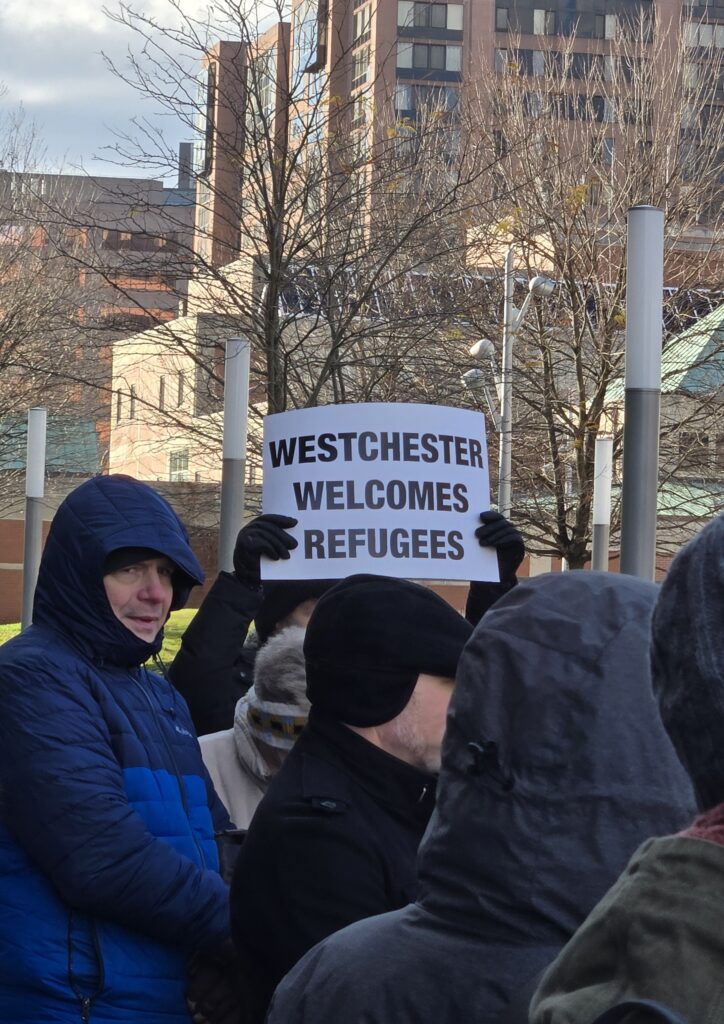
“I am the granddaughter of immigrants. My childhood home was always welcoming to students and visitors from other countries, so it was not a surprise that for the past 10 years I have been part of the Welcoming and Resettlement movements in my area. Through my volunteering to resettle refugees, I now see the world with two sets of eyes – my own and those of our newest neighbors.“
Another supporter, Leigh from Oregon, shared a heartfelt message about the importance of making newcomers feel welcome:
“To all immigrants trying to find a foothold in these United States, I have the utmost respect and love! It is never easy finding that niche where you can not only survive but have joy in our lives as well! Anytime you move to make a new life for yourself and accept the challenges that are thrown to you, you find your way. All immigrants deserve respect and admiration.”
One supporter wrote us about the moment they no longer felt they had to worry about their immigration status:
“I remember the feeling I had when I left the United States for the first time after getting my green card. I was so nervous coming back in that something would go wrong. But the border agent looked at it, looked at me, smiled, and said, ‘Welcome home.’ That was the moment that it finally felt real, and it was the best feeling ever.”
Whether your support for newcomers is driven by your ancestry, your faith, your sense of community, or simply your empathy, it has allowed this country to flourish into a beautiful mosaic of cultures that benefits us all.
An anonymous caller made this abundantly clear when talking about how he felt as a newcomer into a multicultural community:
Trinh Tran, Supervising Attorney with IRAP and proud refugee, echoed that feeling:
“This year marks 30 years since I became a naturalized U.S citizen. I remember during the process I was asked to change my name so that it could be easier for Americans to pronounce and so that I could fit in with others. I did not change my name. I knew then as I do now that how your name is pronounced does not make you more or less American. To me, being an American is welcoming the stranger and not being afraid to be who you are. My name is Trinh Tran. I am a proud refugee and I am a proud Vietnamese American.”
Another IRAP staff member called in to talk about how staying in touch with her roots has driven her passion for work on behalf of refugees:
However, this multicultural nation didn’t just happen by chance – we had to fight for it over generations. Valarie Kaur shared the enduring legacy of immigrants like her grandfather, Kehar Singh, who was detained on Angel Island when he arrived to the United States from Punjab in 1913:
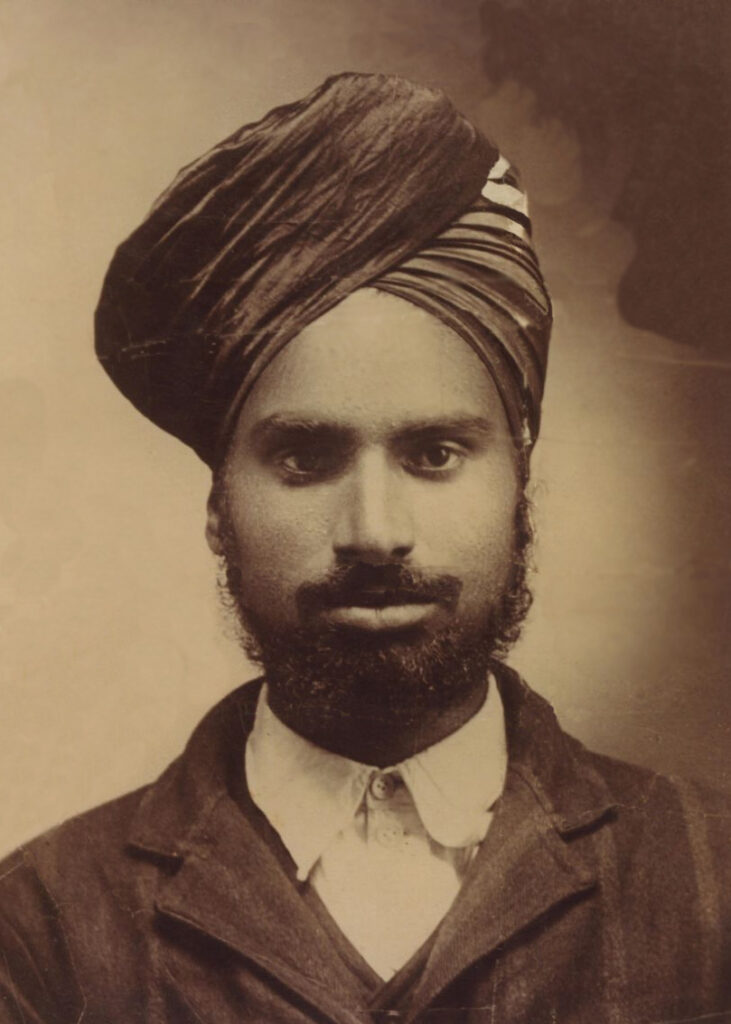
“[Angel Island] is a place where time folds, where the ancestors speak to us and we speak to them. And then we find a way to tell the story to our children and give them not just this history of trauma and victimhood but know this inheritance of courage and wisdom… The only reason we have any semblance of a multiracial nation now is because they dreamed otherwise.“
For 250 years, immigrants have moved to the United States and helped build our cities, culture, and values–and that story does not end in 2026. As we reckon with increasing anti-immigrant rhetoric and policies, we stand at a crossroads where we must continue to dream of a future we all want to live in and work together to make it a reality.
Ghita Schwarz, IRAP’s Senior Director of U.S. Litigation, left us a blueprint of what the next 250 years she hopes for looks like and how we will look back at these first 250 years in the future:
This project allowed us to see the United States of America through the eyes of people who care deeply about immigration – you! While we heard from many different perspectives, we all share a common goal. Sharif Aly, IRAP’s President, summed it up perfectly when he said:
“America should be a place of hope, a place of safety, and a place people can call home.”